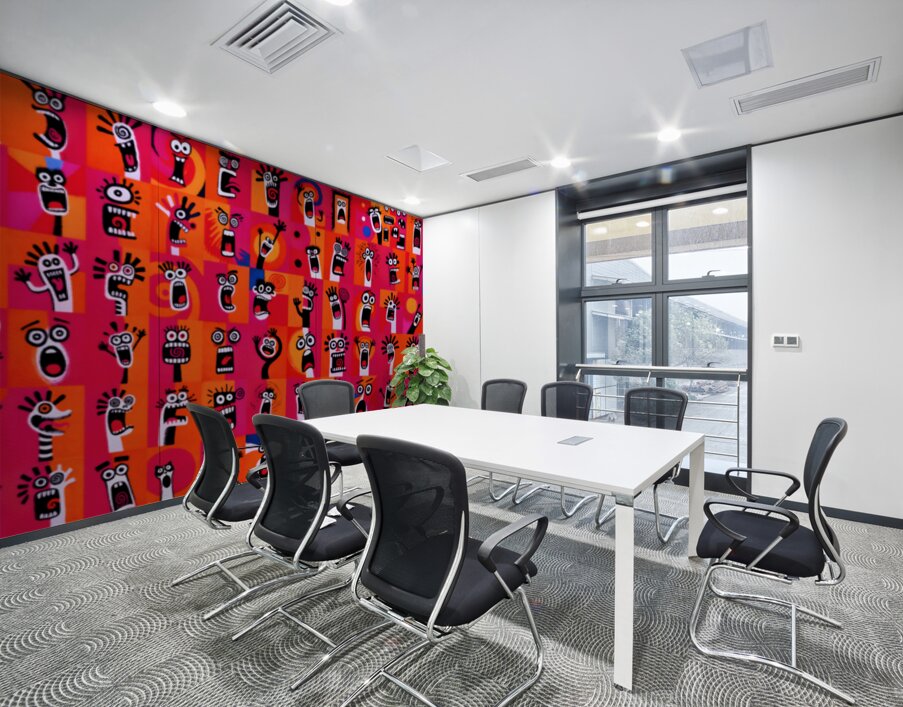
A big blank wall can make the whole room feel unfinished.
You can have the right sofa, lighting, rug, and layout. But if the wall is empty, the room still feels off.
Most people try to fix it. They just do not go big enough.
Big walls make small art look cheap.
The fix is simple. Match the scale of the art to the scale of the wall.
The Biggest Mistake Is Choosing Art That Is Too Small
A few small frames do not solve a large wall.
They make the empty space more obvious. Now the wall still feels blank, but it also feels cluttered.
If the wall is wide, tall, or open, the art needs presence. That can mean one oversized print, a structured layout, or a full wall mural.
One Oversized Statement Print Is the Cleanest Fix
One large print is the simplest way to finish a blank wall.
It anchors the room. It creates a focal point. It makes the space feel planned instead of patched together.
This works best in living rooms, dining areas, bedrooms, and above large furniture.
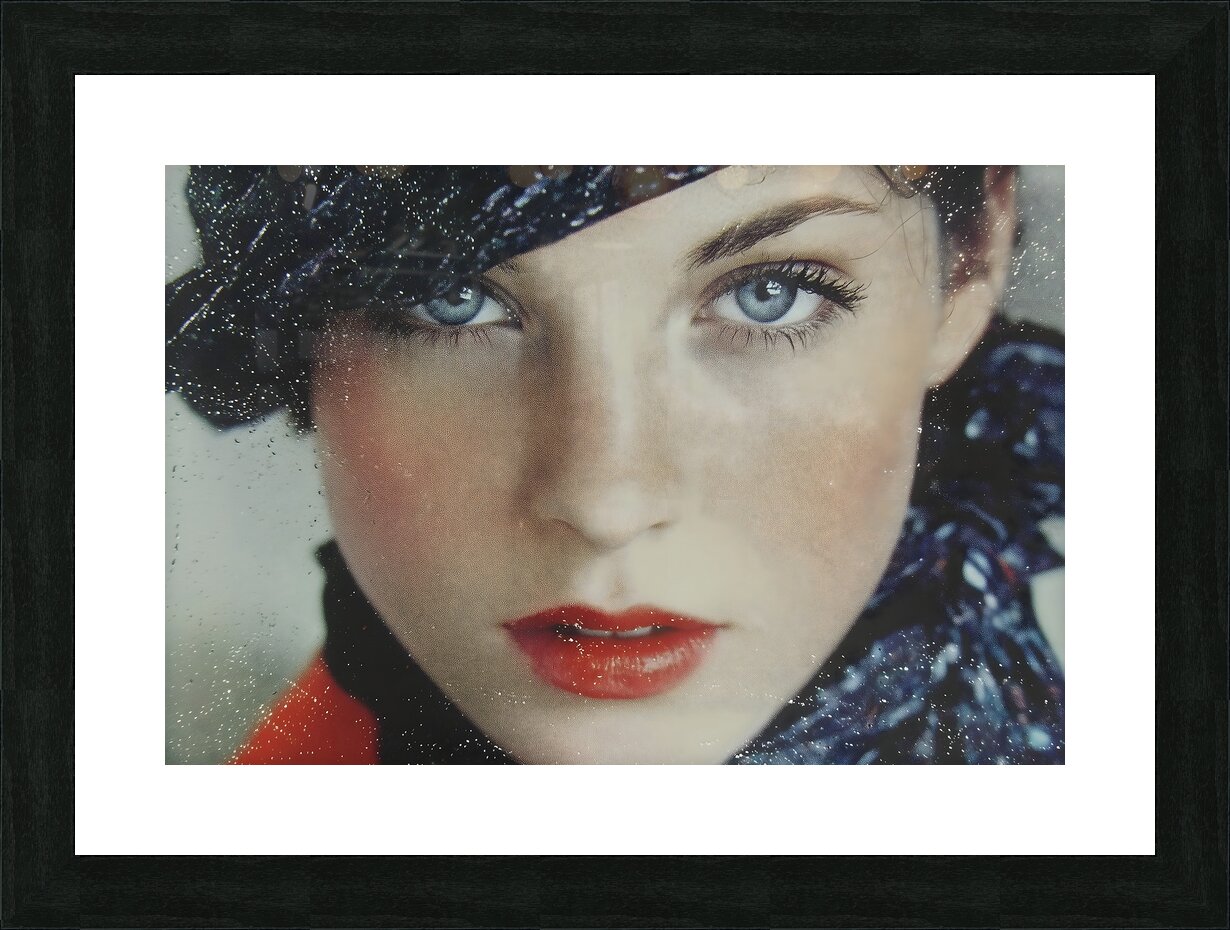
A Three-Piece Layout Adds Scale Without One Huge Print
A three-piece layout works when you want width and balance.
It fills horizontal space above a couch, bed, or dining table. It also gives the wall structure.
Keep the spacing tight and even. If the gaps are too wide, the layout starts to feel scattered.
A Gallery Wall Only Works When It Has Structure
Gallery walls can work, but they need rules.
- Choose one clear center.
- Keep the color palette consistent.
- Use even spacing.
- Avoid random sizes with no pattern.
Random gallery walls often look busy. Structured gallery walls look intentional.
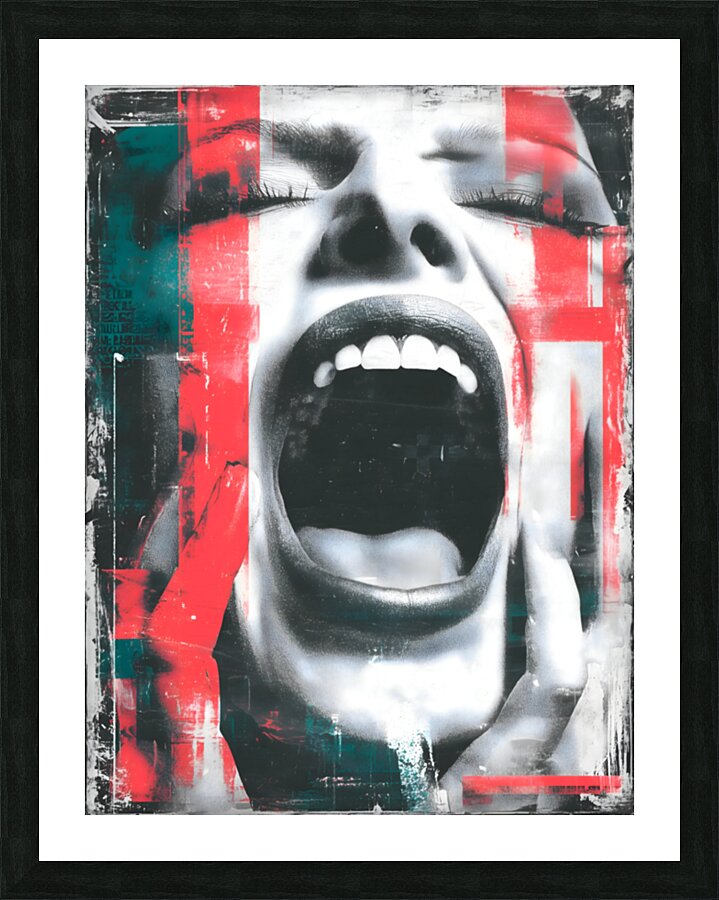
Full Wall Murals Create the Highest Impact
If you want the room to feel completely different, choose a full wall mural.
A mural does not just decorate the wall. It changes the room.
It covers the full surface, removes the empty-wall problem, and creates an immersive focal point.
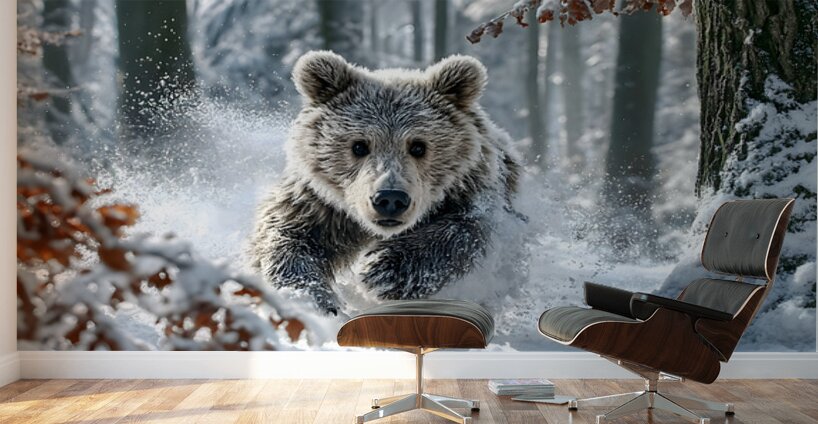
Choose a Wall Mural When the Room Needs Identity
Murals work best on large, open walls with few breaks.
Choose a mural when you want a bold visual statement, a feature wall, or a room that feels designed around one strong idea.
They work especially well in living rooms, dining rooms, bedrooms, offices, and creative spaces.
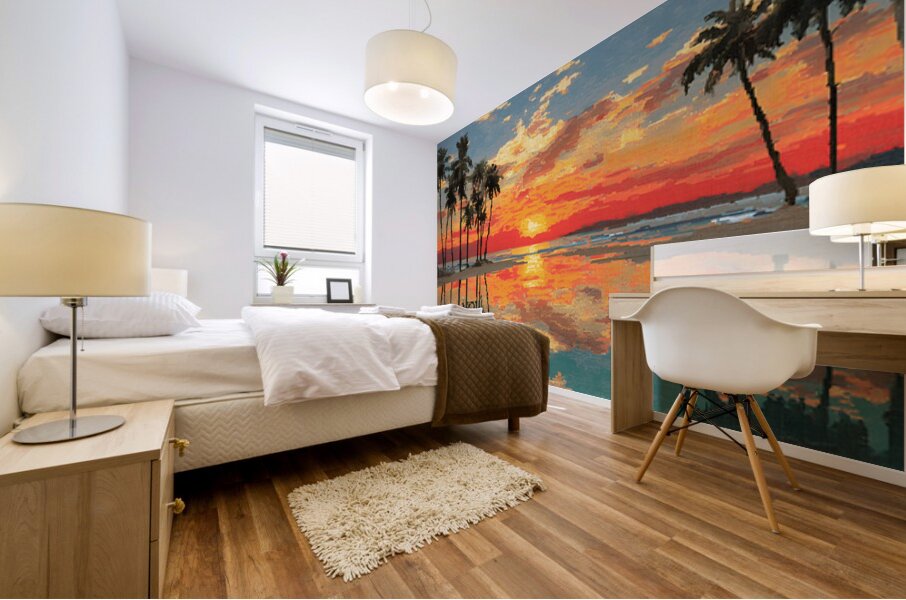
The Best Wall Mural Style Depends on the Mood You Want
Nature murals add calm and depth. Think mountains, forests, waves, rivers, and open skies.
Abstract murals feel modern and clean. They work well when you want scale without a literal scene.
Statement murals add personality. Use them when the room needs energy, identity, or a stronger point of view.
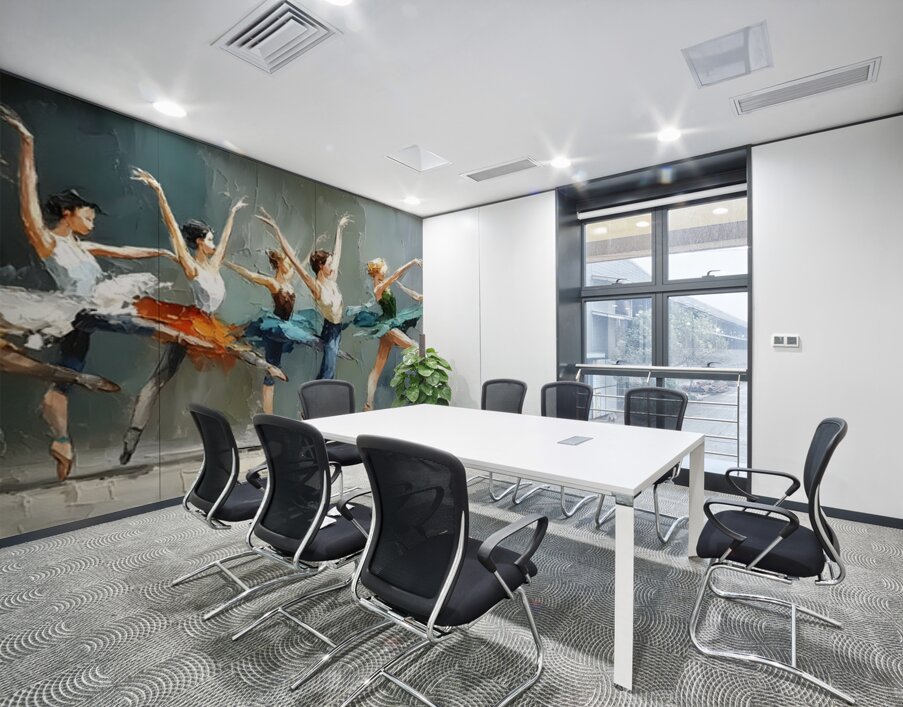
Oversized Prints Give Flexibility. Murals Give Transformation.
Choose an oversized print if you want flexibility. You can move it, swap it, frame it, or change the room later.
Choose a wall mural if you want maximum impact. A mural is best when the wall itself should become the focal point.
Neither choice is wrong. The right choice depends on how much change you want.
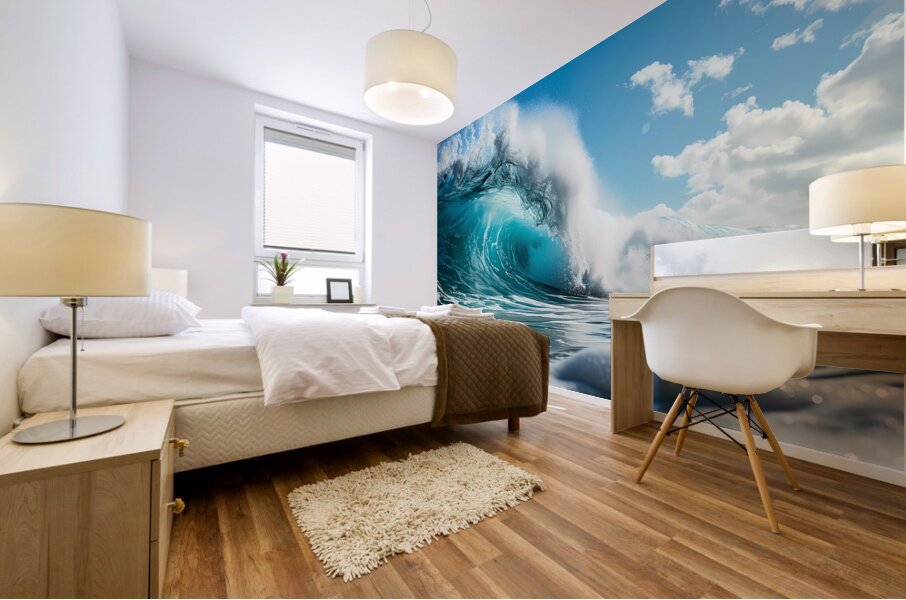
How to Choose the Right Size
Size is where most people hesitate.
- Above a couch, choose art about two-thirds the width of the couch.
- On a large open wall, choose oversized art or a mural.
- On a tall wall, use a vertical piece or full coverage.
- On a feature wall, go bigger than feels safe.
If you are unsure, go bigger. Too small almost never works on a large wall.
Canvas, Framed, Metal, or Mural?
- Canvas feels soft, warm, and natural.
- Framed art feels polished and structured.
- Metal feels bold and modern.
- Murals create the strongest transformation.
For most rooms, canvas or framed prints are the safest choice. For maximum impact, choose a mural.
A Large Wall Is the Biggest Opportunity in the Room
A large wall is not a problem to work around.
It is the best chance to make the room feel finished.
You can fill it. You can anchor it. Or you can transform it.
Most people stop at filling it. The best spaces go further.